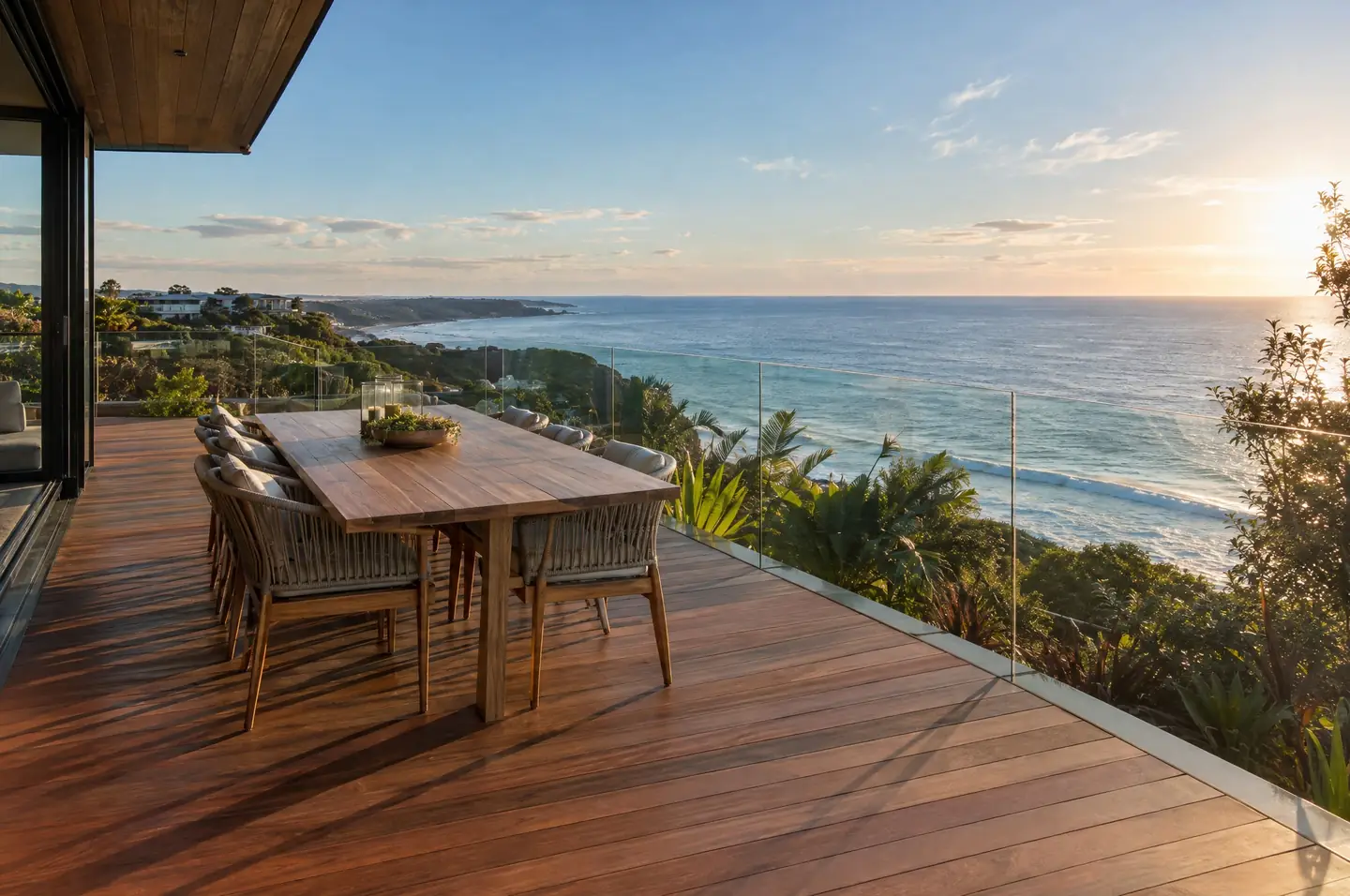
Deck restoration across the Northern Beaches
Decks are where Beaches homes are lived in, and they take the worst of the weather. Ultraviolet breaks down the surface fibres of spotted gum, merbau and treated pine until the timber silvers and the grain lifts, salt spray dries into the surface, and the shaded, south-facing boards grow black mould and slime. Nail heads and screw fixings rust and bleed dark stains, oiled handrails go sticky, and screens and fences around pools fade to grey. Many decks here were built on steep blocks as raised platforms, so the structure underneath, posts, bearers and brackets, deserves a look at the same time.
Restoration follows a sequence: a clean with a timber-safe solution and controlled pressure, mould treatment, sanding where the grain has lifted, replacement of split boards and corroded fasteners, then oil or stain suited to the species and the exposure. The clean-up water is loaded with tannin and cleaner, so a vetted tradie keeps it off paving that stains and out of the stormwater system. Decks over drops are worked with fall protection in place. If the deck belongs to an apartment and faces the street or sits over common property, the owners corporation needs to approve the job. Where a lot is mapped as bushfire prone, new decking materials may have to meet construction standards.
Post the deck's rough size, the timber if you know it, when it was last oiled, and photos of the worst boards and the structure beneath. Tradies who already restore decks on the Beaches receive it; the one who takes it gets in touch and quotes directly, generally after seeing the deck in person. A sound quote separates cleaning, repairs and coating, names the product and the number of coats, and says how many dry days the timber needs before and after. The homeowner pays no fee, and no quote has to be accepted. Spring and autumn give the most reliable drying weather here.
Deck restoration services
Suburbs in the Northern Beaches
Frequently asked questions
Exposed, north-facing decks within reach of spray often need a maintenance coat every year, while sheltered harbour-side decks may go two years or more. Topping up a penetrating oil is far easier than dealing with a film-forming stain, which has to be stripped once it peels. The tradie can suggest an interval after seeing how the timber has weathered.
Most tradies favour penetrating oils for spotted gum and merbau in coastal exposure, because they feed the timber and wear away gradually rather than peeling. Pigmented oils add UV protection and keep the colour longer. Film-forming stains suit screens and fences more than foot traffic.
Yes. Corroded fasteners are punched or removed and replaced with stainless steel or hot-dipped galvanised screws, and the dark stains are treated with an oxalic-acid timber brightener before coating. In salty air, stainless fixings are the better long-term choice.
Usually, if the deck sits on common property such as a balcony slab or waterproofing membrane, or is visible from outside. Check the by-laws and speak to the strata manager; the tradie's quote and insurance certificate can be provided for that approval.