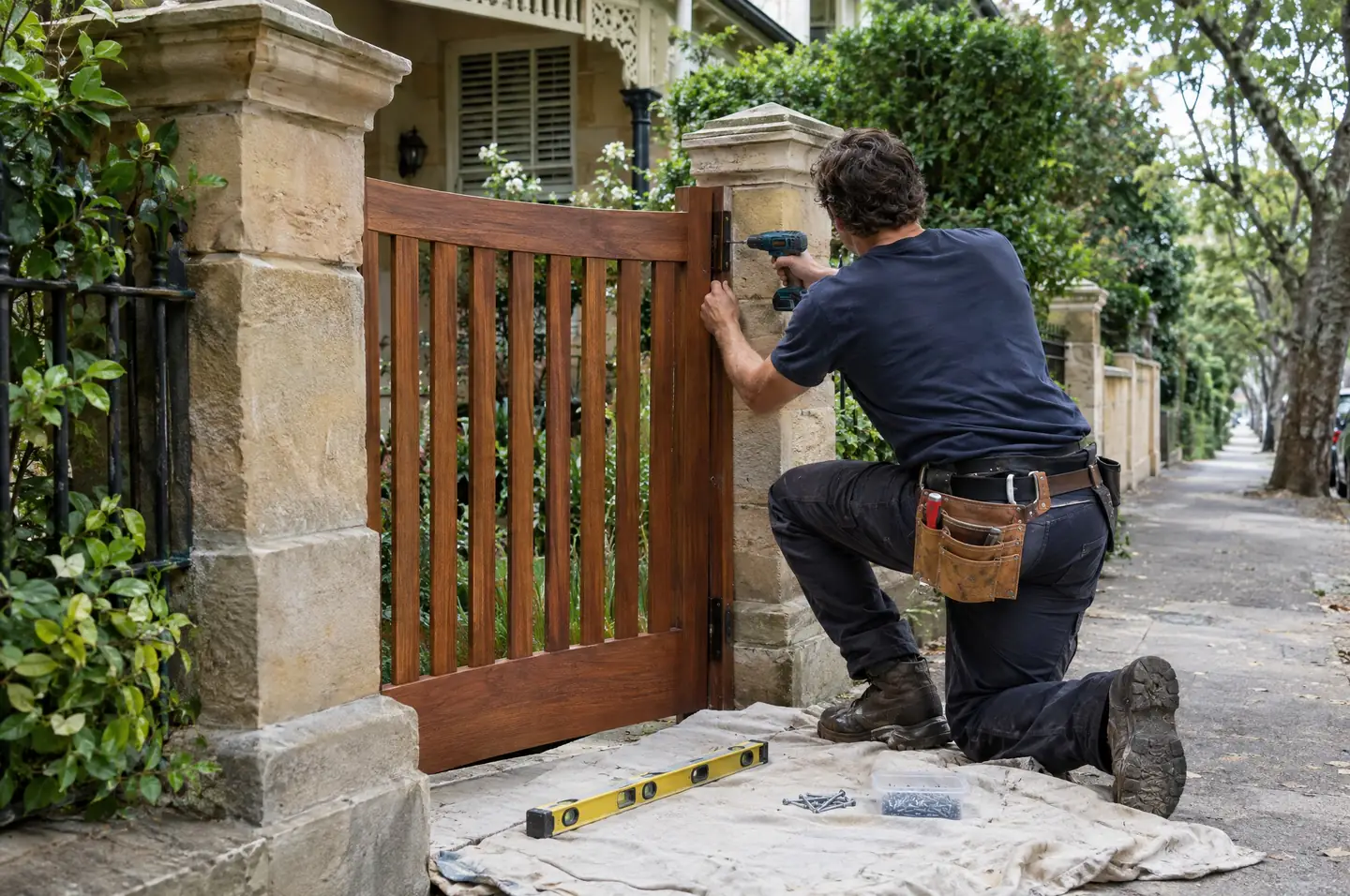
About door, lock & window repairs
This is repair work rather than replacement: easing and re-hanging doors, swapping hinges and handles, fitting or re-keying locks, re-cording and re-balancing sash windows, replacing rollers and tracks on sliding doors, fixing winders and stays on casement and awning windows, re-meshing flyscreens and replacing cracked glass. Most of it is a handyman's bread and butter, some of it calls for a locksmith or a glazier, and the right match depends on what has actually failed. Doing it early is cheaper: a door that drags wears its hinges and frame, and a window that is painted shut stops ventilating a room.
Housing stock drives the faults. Victorian and Federation terraces in Paddington and Woollahra and bungalows in Mosman and Lindfield have double-hung sash windows with cords and cast-iron weights that fail after decades, and heritage conservation area rules may limit what can change on the street facade. Post-war houses in Dee Why and Collaroy have aluminium sliders whose rollers corrode in salt air; marine-grade stainless replacements last longer. Timber swells in humid summers from Manly to Coogee, so doors that stick in February often free up by August, and the fix is easing and sealing the edge. Apartment entry doors and external windows are usually common property.
Rules depend on the piece. Fitting a basic lock as part of general home maintenance sits inside an exemption published by the NSW Police Security Licensing and Enforcement Directorate, but anyone hired specifically to install, repair or maintain locks needs a security licence under the Security Industry Act 1997, which is what a locksmith holds. Replacement glass must meet the safety glazing rules in the National Construction Code and AS 1288, including Grade A safety glass in doors and side panels. Repairs over 5,000 dollars become licensed building work. We check the licence that applies, plus ABN, insurance and references, before matching.
What the job usually includes
How it works
- Tell us the jobPhotograph the door or window closed and open, the hardware and any damage, and describe the fault in plain words: drags on the floor, will not latch, sash drops, roller grinds. Say the age of the house if you know it and whether it is strata or in a heritage conservation area.
- We match the right tradieEasing, hinges, rollers and screens go to vetted handymen in your suburb. Lock-focused jobs go to licensed locksmiths. Glass replacement goes to glaziers who work to the safety glazing rules. Each has had ID, ABN, insurance and recent local work checked, and the right licence verified where one applies.
- They quote you directly in writingThe tradie confirms the fault, often by phone with your photos, then quotes under their own ABN. The quote should name the hardware or glass type, say whether it is repair or replacement and flag anything that needs council or strata approval.
- The repairThe tradie protects floors, removes the door or sash carefully, planes and seals edges so timber does not drink moisture, fits hardware with corrosion-resistant screws, and tests the operation through the full travel. Old glass is removed with the opening boarded or taped safely, and new glass is marked and fitted to standard. Old parts and glass leave with them.
- After the jobOpen and close everything a few times, check latches catch cleanly, and keep the keys and the invoice together. For new locks, note the key profile for future copies. Then tell us how it went. Feedback after every job is how the network stays sharp.
Fix the cause, use parts that suit salt air, respect old joinery
Good repairers diagnose before they cut. A sticking door can be swollen timber, a dropped hinge, a loose frame or a house that has moved on its footings, and each has a different fix. Planing a door that only needs its hinge screws replaced with longer ones ruins the fit for the next dry month. On sash windows, the careful approach is to keep the original joinery: new cords, cleaned pulleys, re-balanced weights or discreet spiral balances, rather than fixing the sash shut or replacing it with something that does not suit a heritage facade. Sealing every freshly planed edge is the step most often skipped.
Hardware choice decides how long the repair lasts. Within sight of the ocean, mild steel hinges, rollers and screws rust quickly; 316 stainless or quality brass costs more and lasts. On locks, a good tradie is honest about scope: fitting a basic latch set as part of a wider repair is one thing, but re-keying, master keying and repairing failed cylinders is locksmith work under a security licence, and the keyed locks an insurer may require should be fitted to the door's standard. On glass, anything in a door, beside a door or low to the floor must be Grade A safety glass; a cheap pane of ordinary annealed glass there is unlawful and dangerous.
Questions worth asking the tradie
Frequently asked questions
Timber absorbs moisture from humid air and swells across the grain, which is pronounced in coastal suburbs. The fix is to ease the binding edge during a humid spell, then seal the bare timber so it stops drinking moisture. Planing in dry weather usually takes off too much.
A handyman can fit basic locks as part of general home maintenance under an exemption published by the NSW Police licensing directorate. Someone engaged mainly to fit, repair or service locks needs a security licence, which licensed locksmiths hold. For re-keying, failed cylinders or a full change of locks, we match a licensed locksmith.
Almost always. Broken cords, seized pulleys and missing weights are standard repairs, and spiral balances can replace weights where the box frame is damaged. Keeping original joinery matters in heritage conservation areas, where replacing street-facing windows may need council approval. Check with council before replacing.
The National Construction Code and AS 1288 call for Grade A safety glass in doors, in panels within 300 mm of a door, in glazing with a sight line below 500 mm from the floor, and safety glazing in bathrooms where glass sits below two metres. Elsewhere, ordinary glass of adequate thickness may be allowed. A glazier should mark and fit to the standard.
In most NSW strata schemes, external windows, balcony doors and the entry door to a lot are common property, so the owners corporation is responsible for structural repair and approval is needed for changes. Internal doors and hardware inside the lot are yours. If you are unsure, check with the strata manager first.
Not usually. General repairs under 5,000 dollars in value are unlicensed, which is why we verify ID, ABN, insurance and references. Lock work has its own security licence, and electrical work on automatic doors or alarms needs a licensed electrician. Over the threshold, a contractor licence applies.