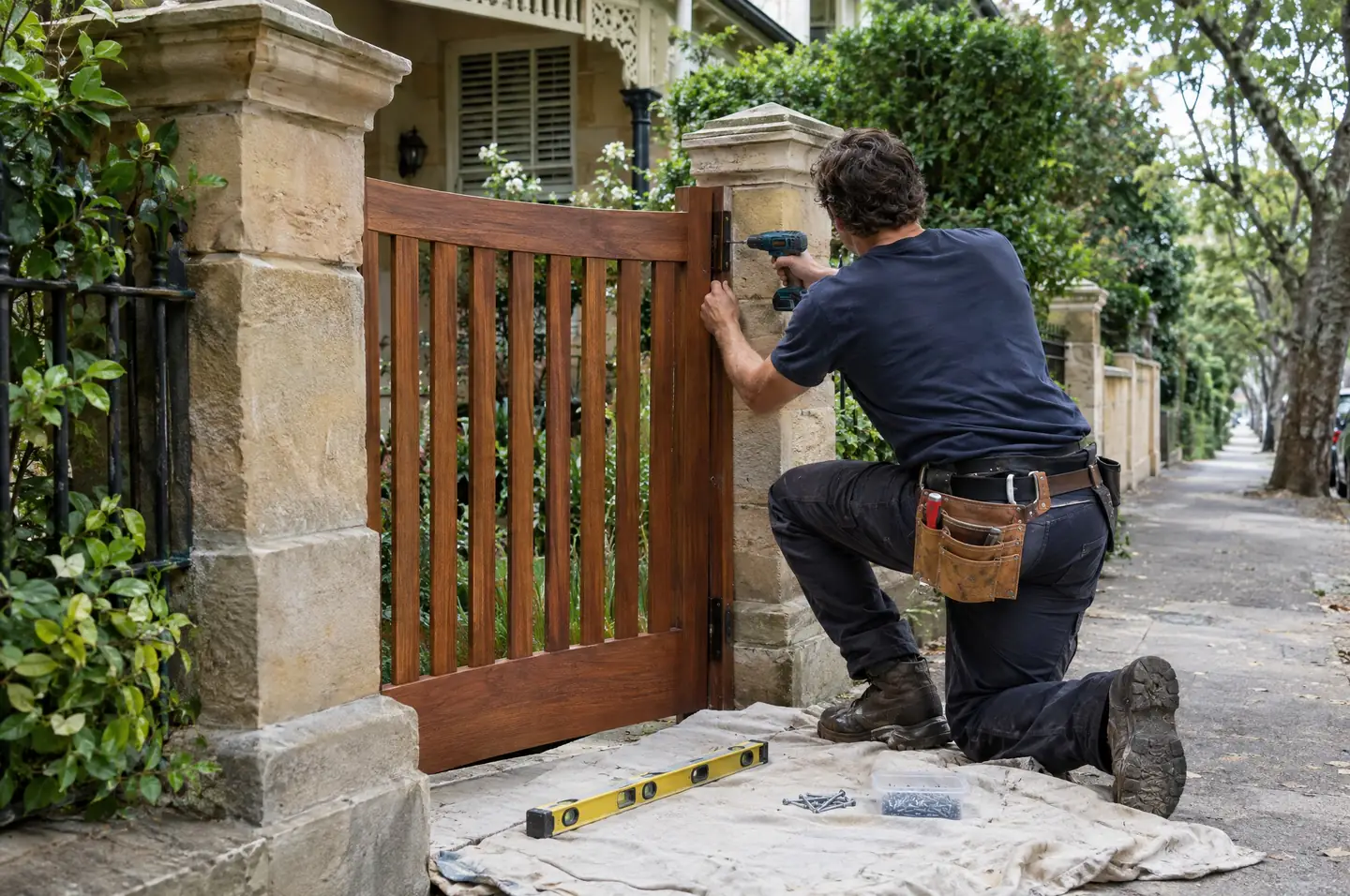
About tv, mirror & picture mounting
Mounting is about load and wall type. A television on a fixed or articulating bracket puts a steady pull on a few fixings, and a full-motion arm multiplies that when the screen is extended. Mirrors are heavier than they look and shatter if they fall. Pictures range from a hook in a picture rail to framed works that need two-point hanging to stay level. A good handyman checks the bracket's VESA pattern and weight rating against the screen, finds studs or chooses masonry anchors, hides cables where it is legal to do so, and leaves everything level and plumb.
Walls around here vary from street to street. Federation and inter-war houses in Mosman, Killara and Hunters Hill have double brick, sometimes with plasterboard on battens, and picture rails that were designed to carry art without a single hole in the plaster. Post-war homes in Dee Why and Collaroy mix brick veneer with fibro sheet, and anything built before 1990 should be treated as possibly containing asbestos until checked. Apartments in Bondi and Neutral Bay often have concrete or steel-stud walls, and party walls are common property. Near the surf, bare steel brackets streak rust within a year, so coated or stainless hardware is the right call.
No licence is needed to fix a bracket, mirror or picture to a wall in NSW, but the moment a power point is added or moved behind the screen it becomes electrical work, which is licensed at any value and must comply with AS/NZS 3000. A handyman may run low-voltage HDMI and speaker cable inside a wall; the 240 volt side belongs to a licensed electrician. Because the mounting itself is unlicensed, we rely on vetting: identity checked against an ABN, insurance that is current, recent installs in these suburbs that we have seen photos of, and references, plus a code of conduct.
What the job usually includes
How it works
- Tell us the jobSend a photo of the wall, the screen size and model or the mirror dimensions and weight, and the bracket if you have one. Say what the wall is made of if you know, whether cables need hiding and whether there is a power point where you want the TV.
- We match vetted local handymenYour job goes to handymen in the network who mount regularly in your suburb. Each has shown us photo ID matched to an active ABN, a public liability certificate, recent install photos and two references. The service is free and you decide who, if anyone, to hire.
- They quote you directly in writingThe handyman confirms wall type and bracket suitability, then quotes under their own ABN, listing bracket supply if needed, anchoring hardware and cable concealment. If a new power point is wanted, a licensed electrician should be quoted separately, by you or through us.
- The installationThe wall is scanned for cables and pipes, studs are located or masonry anchors chosen, and the bracket is fixed level with dust extraction running. The screen is hung, tested for movement across its full range, and cables are dressed or chased into the wall where that is legal. Mirrors go onto cleats or battens rated well above their weight.
- After the jobPull gently on the bracket, extend any arm fully, and check the screen sits level from the couch, not just against a spirit level. Keep the bracket's documentation. Then tell us how the handyman went; homeowner feedback keeps the network honest.
Fixings first, then level, then the cables
The failures in this job are all about fixings. A television bolted into plasterboard with the plugs from the box, a mirror hung on a single picture hook, a bracket screwed into old lime-mortar brick that crumbles under the arm's leverage. Careful handymen identify the wall before quoting, use a stud finder and a cable detector, and choose anchors by material and load: coach screws into timber studs, sleeve or chemical anchors in solid brick and concrete, specialist fixings in aerated panel, toggles only for light loads in plasterboard. They also consider heat above fireplaces and glare from north-facing windows before drilling.
Cable work is where competence and the law meet. Hiding an HDMI lead inside a wall is tidy and legal; relocating the power point so it sits behind the screen is electrician's work under licence, full stop. Good tradies plan the two together so the wall is only opened once, and say so in the quote. On heritage plasterwork and picture rails in Paddington terraces or Wahroonga bungalows, they use the rail and proper hooks rather than putting new holes in lath and plaster. In strata buildings they check whether the wall is common property before fixing into it, and tell you if approval is needed.
Questions worth asking the tradie
Frequently asked questions
Yes. Solid brick and concrete take sleeve or chemical anchors, and rendered walls are drilled through the render into the masonry behind. Old lime-mortar brick in heritage homes needs care with anchor placement. The handyman should confirm the wall type with you before quoting.
Low-voltage cables such as HDMI, optical and speaker wire can be run inside a wall by a handyman. Adding or moving a 240 volt power point behind the screen is a job for a licensed electrician in NSW, because it is electrical work. Many jobs use both tradies, planned together.
It depends on where the studs are. Heavy mirrors should hang on a split batten or cleat screwed into studs, which spreads the load. Where studs do not line up, rated plasterboard anchors handle moderate weights only. For very heavy pieces, the handyman may recommend a different wall or a floor-standing position.
Where a picture rail exists it is usually the kindest way to hang art, using rail hooks and wire or cord, with no new holes in old plaster. For large pieces, two hooks keep the picture level. The handyman can also fit a modern hanging system below the cornice if you prefer.
Inside your lot, generally yes. External walls, boundary walls between units and structural slabs are usually common property, and by-laws may restrict fixing into them. Check with your strata manager if the wall you want is shared. Mention strata when posting the job so the handyman can advise.
No. Mounting brackets, mirrors and pictures is not licensed work. That is why we check each handyman's ID against their ABN, their public liability insurance and their recent local jobs before matching, and why anything electrical is handed to a licensed electrician.