About household rubbish removal
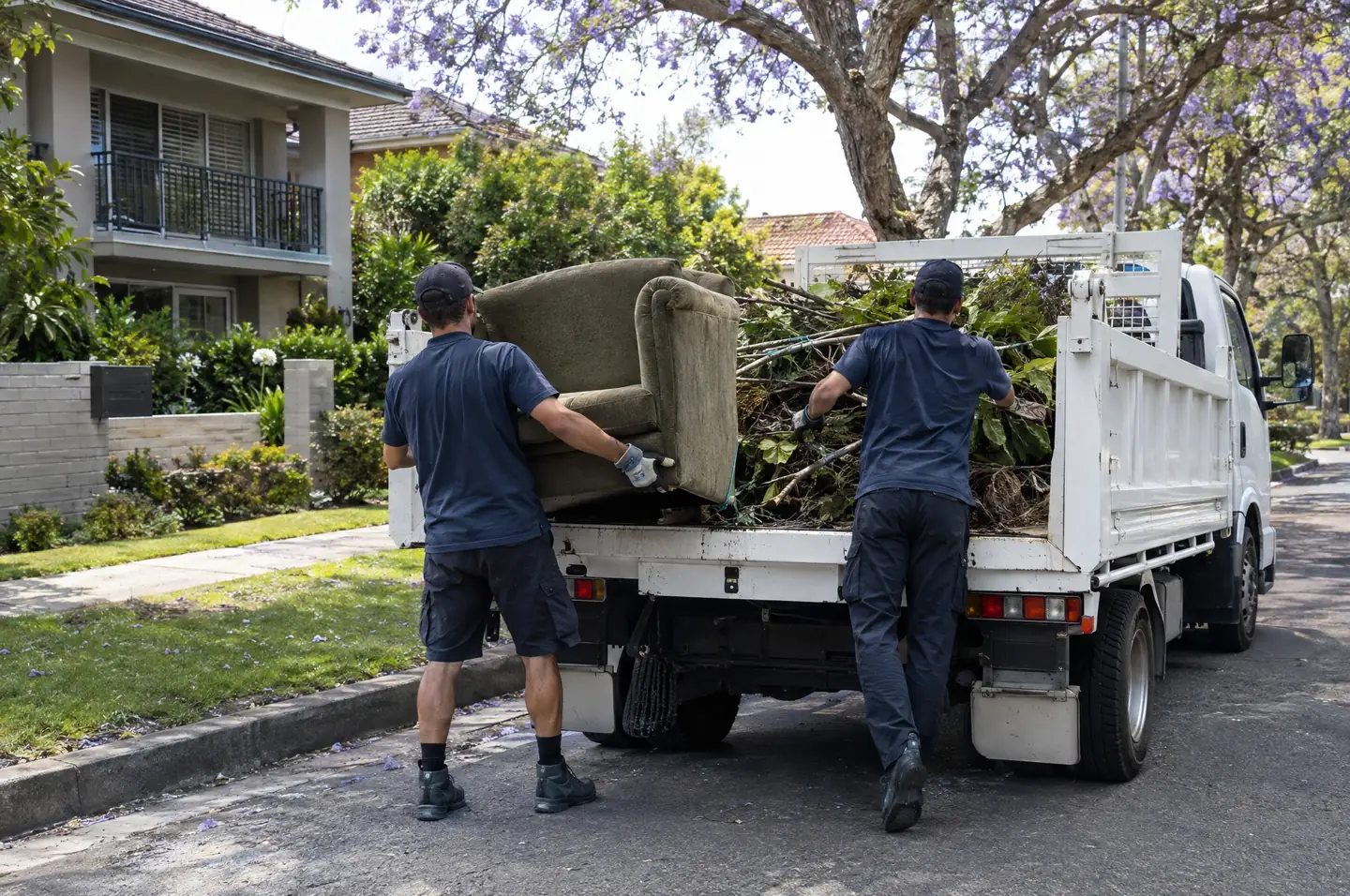
Household rubbish removal is the load-and-go service: a crew with a truck or trailer comes to the house, carries the items out, loads them and takes them to a licensed facility, with recycling and donation sorted on the way. It suits single items such as a lounge, a fridge or a mattress, garage and shed clear-outs, moving out, and the pile of furniture and boxes that builds up after a renovation. It beats a skip when there is nowhere to put one, when strata will not allow one, or when you do not want to do the lifting yourself, and it fills the gaps that council clean-ups leave.
The logistics are what make these suburbs different. Apartment-heavy Bondi, Manly, Dee Why, Neutral Bay and Randwick mean lifts to book, loading docks with time limits and strata rules about moving large items through foyers. Paddington and Woollahra terraces often have lane access only, Double Bay and Mosman streets have tight parking, and steep driveways in Castlecrag, Seaforth and Northbridge mean a long carry. Council collections help but are limited: Woollahra offers three scheduled collections a year, Waverley two booked and one scheduled with a 2 cubic metre limit, and Northern Beaches a booked service capped at 3 cubic metres, with e-waste, building materials and chemicals excluded almost everywhere.
No licence is needed to remove household rubbish in NSW, which is why where the load ends up matters so much. Waste must go to a lawfully operating facility; dumping it in bushland, on a verge or in someone else's skip is illegal dumping under NSW environment protection law, and the EPA and councils pursue the people who do it. Every rubbish removal tradie in the network has identification matched to an active ABN, current public liability insurance, references and photos from local jobs, and has signed up to written quotes and a clean site. Ask for the tip receipt.
What the job usually includes
How it works
- Tell us what needs to goList the main items and estimate the pile in trailer loads or cubic metres if you can; a few photos do the job better. Say which floor the items are on, whether there is a lift, where a truck can park and whether anything is heavy, awkward or might contain hazards such as asbestos or chemicals.
- We match local rubbish removersThe job goes to vetted, independent rubbish removal tradies who work in your part of Sydney and have passed identity, ABN, insurance, work-history and conduct checks.
- They quote you directlyInterested tradies contact you and quote in writing under their own business name, usually from your photos, confirming on arrival. The quote should state the volume it covers, what is excluded, how recycling is handled and where the waste goes. You pick one, or none.
- Collection dayA careful crew protects floors, door frames and lift walls, removes fridge doors for transport, keeps e-waste, metal and reusable items separate, secures and covers the load, and leaves nothing on the kerb. Hazardous items are left behind with advice on the right drop-off rather than mixed in. The space is swept before they leave.
- After pick-upCheck the space and the kerb, and ask for the facility receipt if you want proof of lawful disposal. Let us know how the match went; your feedback is part of how tradies stay in the network.
The difference is in the sorting and the destination
Anyone with a ute can take a lounge away. A good rubbish removal tradie sorts as they load so that metal goes to a scrap yard, cardboard and e-waste to recycling, mattresses to a recycler that strips the springs and foam, and sound furniture to a charity or community group rather than landfill. They quote on an honest estimate of volume and weight, explain what changes the price before the truck is loaded, and do not add surprise charges for stairs they could see in the photos. Loads are secured and covered, because debris on the road is both dangerous and fined.
The destination is the part you cannot see, and it is where the risk sits. Household waste must go to a lawfully operating transfer station or landfill, and a tradie who is vague about which one, or whose price is far below everyone else's, may be dumping in bushland or on a vacant block. Ask for the receipt. Good operators also know what they cannot take: asbestos, gas bottles, paint, chemicals, batteries and tyres have their own routes through council chemical collections and community recycling centres, and fridges should go somewhere the refrigerant is recovered rather than vented.
Questions worth asking the tradie
Frequently asked questions
Asbestos, which needs a licensed removalist for anything over 10 square metres and a licensed landfill in every case; gas bottles, paint, pool chemicals, pesticides and other household chemicals, which go to a council chemical collection or a community recycling centre; and usually car batteries and tyres. Fridges and air conditioners can be taken, but the refrigerant should be recovered by a licensed person before the unit is scrapped. A good tradie will tell you where each item goes.
By volume, usually in cubic metres or fractions of a truck or trailer, with weight mattering for dense loads such as bricks, tiles and soil. Stairs, long carries and dismantling can add labour. A written quote should state the volume it covers and what would change it, so there are no surprises when the truck is full.
Use it when the items are accepted, the timing works and you can wait. Councils here offer a few free collections a year, with volume caps and exclusions such as e-waste, building materials and anything hazardous, and items put out early can be treated as dumping. A private tradie makes sense for anything the council will not take, for a date that suits you, for items that need carrying out of the house, and for apartments where kerbside piles are a problem.
Someone needs to let the crew in and confirm what goes, unless the items are already outside and clearly marked. For apartments the strata manager may need to book the lift and protect the foyer. Agree these details on the quote so the day runs smoothly.
To a licensed transfer station, recycling facility or landfill, with recyclables and reusable items split off first. Woollahra Council, for example, points residents to the waste facilities at Rockdale and Artarmon. You can ask the tradie where the load went and for the receipt, which is also your proof that it was not dumped.
Many can, and some specialise in it. A full clearance involves sorting, valuing and donating as well as removing, often over several days, so it is worth posting it as a deceased estate or house clearance job rather than a general pick-up, so tradies with that experience respond.