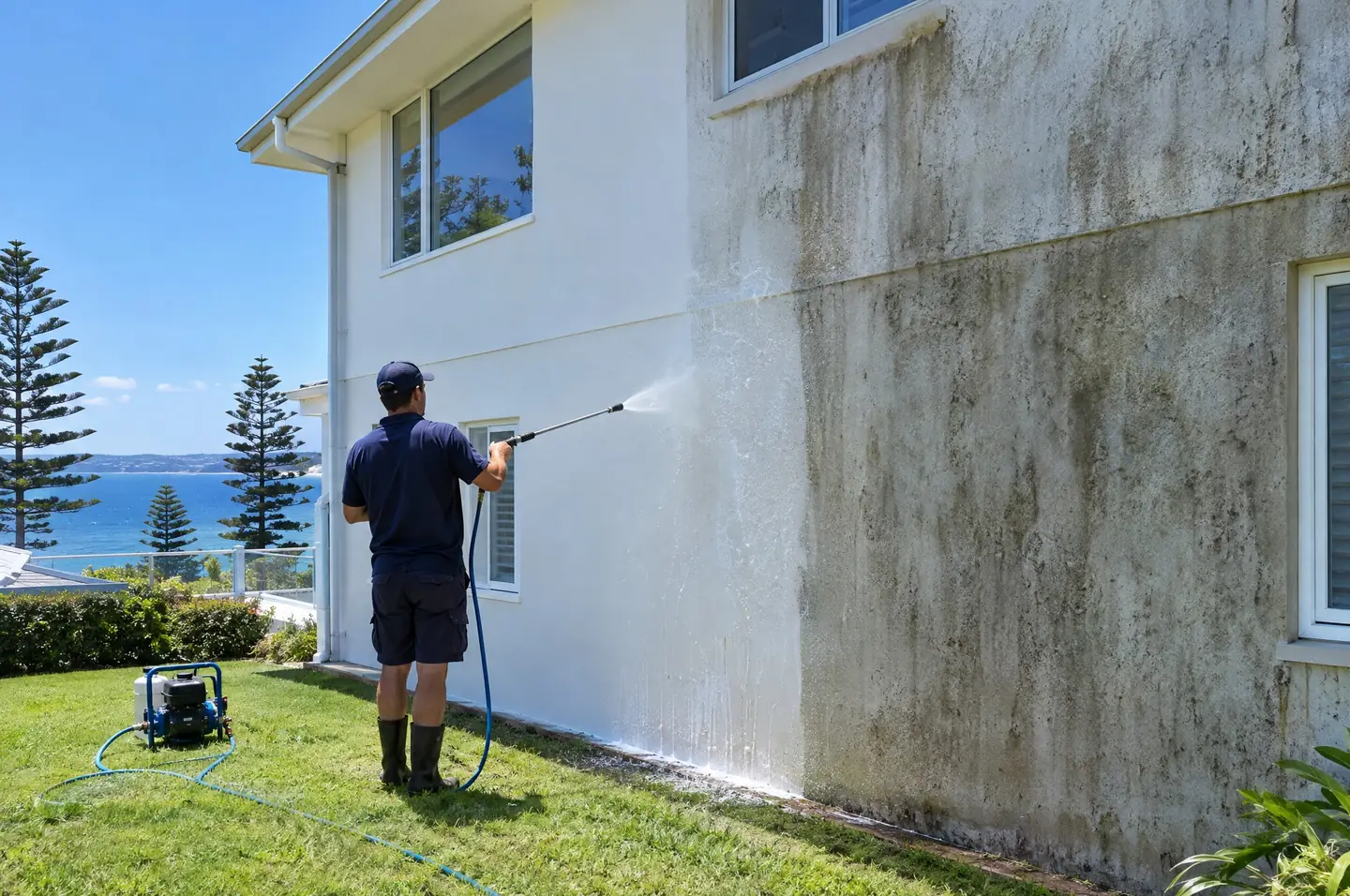
House washing in Clontarf
A Clontarf house is usually two or three levels stepping down the hill, with rendered or painted brick walls, timber or fibre-cement cladding on later additions, a tiled or metal roof and a deck or terrace at each level. The southern and bush-facing walls stay damp and turn green or black with mould. Gutters near the headland bushland block with leaves and bark and overflow down the fascia, leaving dirty streaks. Terraces, stairs and pool surrounds grow algae and become slippery. Roofs on the shaded pitch carry lichen. Glass and stainless on the harbour side pick up a salt film. Most owners want the lot done in one visit: walls, eaves, gutters, roof treatment, paths and the pool surround.
The tradie you are matched with checks each surface before choosing a method. Render, paint and timber get a gentle soft wash using a biodegradable cleaner and a mould treatment; concrete paths and the driveway can take pressure. Fibre-cement sheeting on a house built before 1990 is treated as asbestos: no pressure, no sanding, and advice to have it tested. Because the back of a Clontarf house can be well above the ground on the low side, the tradie works from poles, roof anchors or a platform as the WHS heights rules require. Run-off is diverted to garden beds or collected, never sent down the street drains to Sandy Bay.
Send a few photos through the quote form, including one from the water side if you can, and note how far the house is below the street. Vetted tradies who clean houses around Clontarf and Balgowlah Heights receive the job and come back to you with their own written price. A good quote names each surface and its method, says whether the roof is included and how, covers gutters and downpipes, explains how run-off will be handled, and tells you what to move off the decks beforehand. You compare and decide. Nothing is charged to homeowners, and every tradie who contacts you has cleared our checks on identity, insurance and past work.
Exterior cleaning services you can post
Frequently asked questions
It sits in shade, close to bushland, in humid air off the harbour, so it rarely dries out. That is ideal for mould. A soft wash with a biocide removes it and slows the return; improving airflow and light where council tree rules allow helps more in the long run.
Yes. Experienced tradies soft wash tiled roofs and treat lichen and moss with a biocide rather than blasting them off, which protects the tile surface and the pointing. Metal roofs are rinsed at low pressure. Ask the tradie what method they will use for yours.
Often it can be. Ask for a gutter clean in the same job; near the headland bushland the gutters usually need it. The tradie should also tell you if the downpipes or the overflow points need a plumber.
By diverting it to lawn and garden beds, bunding paved areas and collecting what cannot soak in. Letting detergent or debris into stormwater is an offence in NSW, and the vetted tradie plans this before starting.