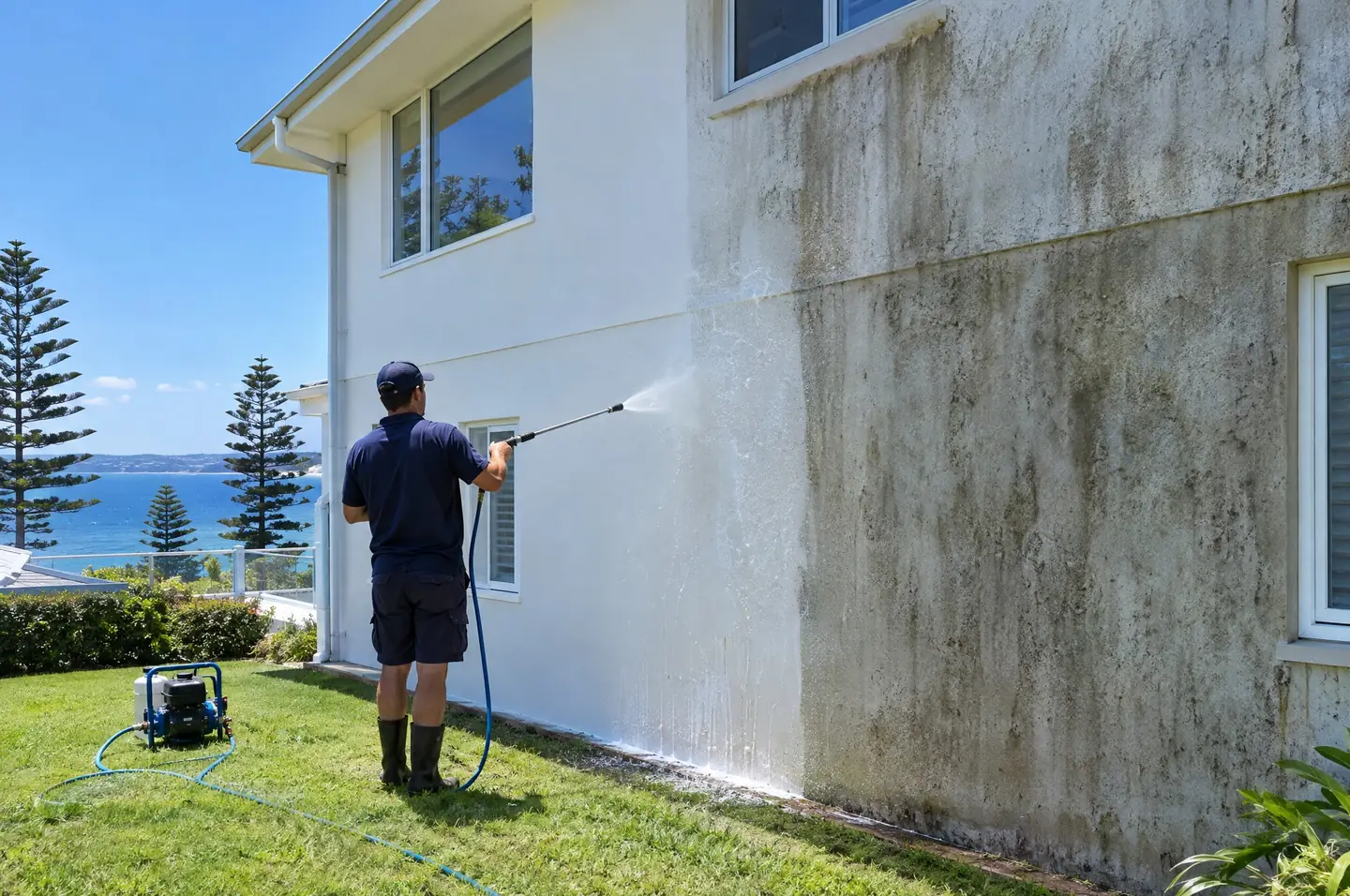
About house washing
House washing is the gentle version of exterior cleaning. The tradie sprays a cleaning mix on at low pressure, leaves it to work long enough to kill mould, algae and lichen, then rinses with plenty of water. Render, brick, weatherboard, fibre cement, painted timber and steel cladding all respond well, and so do eaves, soffits, fascias and gutter faces. It is worth doing when walls have gone green or black on the shaded side, before the painters arrive, before a sale campaign, or simply once a year to stop growth taking hold.
Local conditions decide what builds up. From Bondi to Palm Beach, salt spray leaves a dull grey film that holds dirt, and sea air makes mould grow faster on anything south-facing. Under the tall gums of Wahroonga, Pymble and St Ives, shade and leaf litter do the same job. Many Mosman, Seaforth and Bellevue Hill homes are rendered and painted, which marks easily under high pressure, while Paddington, Hunters Hill and Vaucluse have sandstone bases and heritage facades that need the softest methods of all. In apartment buildings the outside walls belong to the owners corporation as common property, and the strata manager usually books the wash.
No licence covers house washing, so nobody can show you one. NSW does have a minor maintenance and cleaning licence class that takes in pressure washing, but it only bites once a single job tops 5,000 dollars including GST, and a home wash rarely gets near that. So our vetting leans on what matters: photo ID checked against a live ABN, a public liability certificate of currency we have sighted, pictures of recent jobs nearby, references, and sign-up to written quotes and our conduct code. Two legal rules apply to every wash: asbestos cement must never be pressure cleaned, and the stormwater system is off limits for wash water.
What the job usually includes
How it works
- Tell us about the houseUse the quote form to describe the home: single or two storey, cladding type, roughly when it was built, and what is bothering you most. Photos of the worst walls help. Mention access issues, water tanks, pets, and whether there is a date you need it done by, such as before painters or an open home.
- We match vetted local tradiesWe pass the job to vetted, independent exterior cleaners who already work in your suburb and are set up for soft washing. Each has shown us ID matched to an active ABN, a current public liability certificate, and recent work in the area. Matching is free and you are not obliged to hire anyone.
- They quote you directly, in writingThe tradie contacts you, looks at the house in person or from your photos, and sends a written quote under their own business name. It should list the surfaces included, the method, how plants and fittings will be protected, and any extras such as a roof or driveway. Compare quotes on detail, not just the number.
- The washOn the day the tradie wets down gardens, covers anything sensitive, and applies the solution from the bottom up so it does not streak. After it has dwelled, everything is rinsed from the top down. Pressure stays low on render, paint and timber, asbestos cement is left alone, and wash water is directed onto lawn or garden, never into the street drain.
- After the jobWalk the house with the tradie while surfaces are still wet and look at the shaded walls, the eaves and the ground. Ask for any photos of damage they found. Mould can take a day or two to fully disappear after treatment. We will check in for your feedback, which is how the network stays worth being in.
What separates a good house wash from a bad one
The difference is almost always pressure and patience. A careful tradie uses chemistry to do the work: a measured mix of sodium hypochlorite and surfactant applied at little more than garden-hose pressure, left to dwell, then rinsed thoroughly. A rushed one turns the pressure up, which strips paint, etches render, furs up timber, forces water behind cladding and through weep holes, and can drive it into the roof space at the eaves. Good operators also know what not to touch: fibro sheeting on a house built before 1990, lead paint on old timber, and sandstone, which should only ever see a gentle rinse.
The second difference is protection and clean-up. Gardens are watered before and after so the solution never sits on leaves. Powder-coated window frames, copper, brass and galvanised steel are rinsed quickly because bleach marks them. External power points, lights and alarm sensors are covered. Cars, neighbouring walls and pool water are kept clear of overspray. Finally, wash water is kept out of the gutter and the stormwater pit, because sending detergent or paint flakes down a stormwater drain is a water pollution offence; the Protection of the Environment Operations Act applies to tradies and homeowners alike. The quote should say how all of this will be handled.
Questions worth asking the tradie
Frequently asked questions
No. House washing, often called soft washing, relies on a cleaning solution applied at low pressure to kill mould and lift dirt, followed by a thorough rinse. Pressure washing uses force and suits hard surfaces such as concrete and pavers. Walls, eaves, paint and render are better served by the soft method.
Diluted sodium hypochlorite breaks down quickly, but it will burn leaves if it sits on them. A careful tradie waters gardens before and after, rinses any overspray straight away, and asks you to keep pets inside and water bowls covered until the rinse is finished. Ask what mix they use and how they protect the beds under the walls.
Once a year suits most homes in these suburbs. Coastal houses that take salt spray, and shaded homes under big trees, may want a wash more often to stop mould taking hold. Painted surfaces also last longer when they are kept clean, which is why painters usually want a wash before they start.
Yes, carefully. Asbestos cement sheeting on homes built before 1990 must never be pressure cleaned, sanded or scrubbed hard, because that releases fibres. A low-pressure wash with a gentle rinse is the usual approach, and any tradie who suspects damaged or deteriorating sheeting should stop and tell you rather than press on.
Not for a typical home. No licence exists for washing houses in NSW. The state's minor maintenance and cleaning licence category does exist, but it is triggered only past 5,000 dollars including GST on one job. That is why we check ID and ABN, insurance, references and photos of past jobs instead, and why you should too.
Mould, algae, salt film, dust and cobwebs come off with a standard wash. Rust from fittings or fertiliser, tannin from leaf litter, old paint and graffiti need specific treatments, and some marks are permanent. A good tradie will tell you which is which during the quote rather than promising everything will vanish.