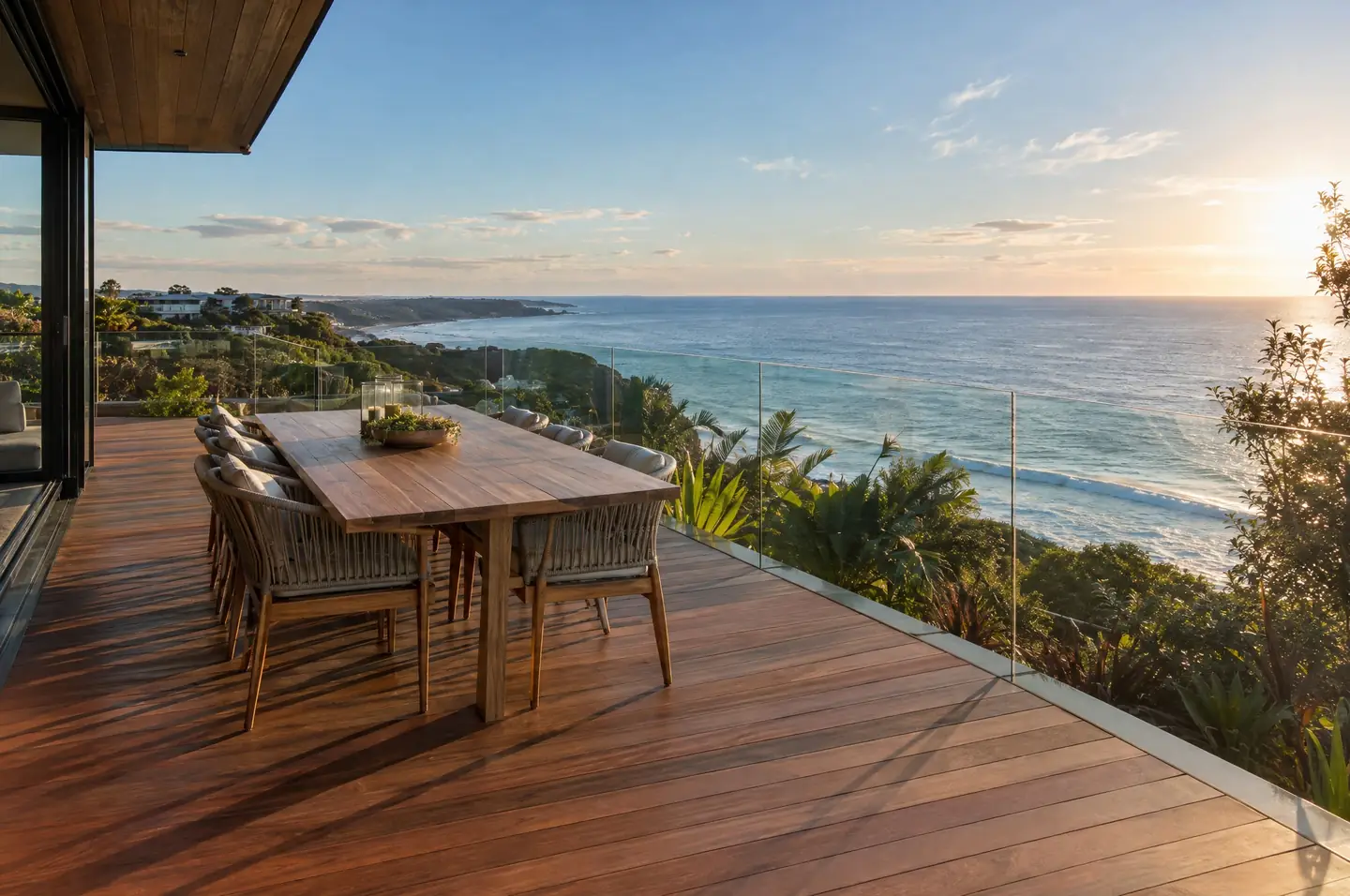
Deck restoration across the North Shore
North Shore decks age in two ways. Those cantilevered over the slopes of Mosman, Northbridge and Castlecrag get full sun and salt air, which bleach hardwood grey, open cracks in boards and corrode fixings until they bleed rust down the timber. Decks in the Ku-ring-gai suburbs sit under tall trees, and shade plus leaf litter means mould, black tannin stains, slippery boards and timber that never fully dries. Fences, privacy screens and outdoor furniture go the same way. Spotted gum, merbau, blackbutt and teak all respond well to restoration if the timber is still sound, and a vetted tradie can tell you quickly whether yours is.
Restoration follows a sequence: clean, repair, sand where needed, then oil or stain. Cleaning uses a timber cleaner and low pressure, because a pressure washer held too close furs the surface. Rinse water carries tannin and cleaning product and must be kept out of stormwater under NSW law, which matters on blocks that drain straight to the harbour. Sanding dust is contained, and old coatings on pre-1970s timber are treated with care in case of lead paint. Loose boards and rusted screws are replaced, usually with stainless fixings near the water. A deck on bushfire-prone land, mapped mainly in Ku-ring-gai and along bush reserves, has material rules for new work, and the tradie should mention them.
Send photos of the deck surface, the handrail and the worst patch, with its approximate size and whether it is in sun or shade. Vetted deck restorers working on the North Shore receive it and reply to you themselves with a written quote that names the coating, the number of coats and whether repairs are included. There is no fee to post, and whether you hire is entirely your call. Larger decking rebuilds pass the licensed building work threshold and go to a licensed carpenter, and balconies on strata buildings need the owners corporation's approval before work starts.
Deck restoration services
Suburbs in the North Shore
Frequently asked questions
Usually, if the boards are sound. A proper clean and brightening treatment removes the grey layer, sanding evens the surface, and oil restores colour. Boards that are cupped, split through or soft with rot are replaced first. The tradie should test a small area before quoting the whole deck.
Shade from tall trees and leaf litter keep the surface damp, and mould and algae grow on it. Restoration removes the growth and a fresh coating slows its return, but regular sweeping and an annual wash make the biggest difference under heavy canopy.
Penetrating oils are easy to top up and suit full sun and salt, while film-forming stains last longer between coats but peel if neglected. Both work on the North Shore. The tradie will recommend based on the timber, the exposure and how much upkeep you want.
Cleaning, sanding and coating are not licensed trades. Structural repairs become residential building work, and once a job passes the NSW licence threshold it needs a licensed carpenter or builder with a written contract. New decks on bushfire-prone land also have material rules. The tradie should flag either case.