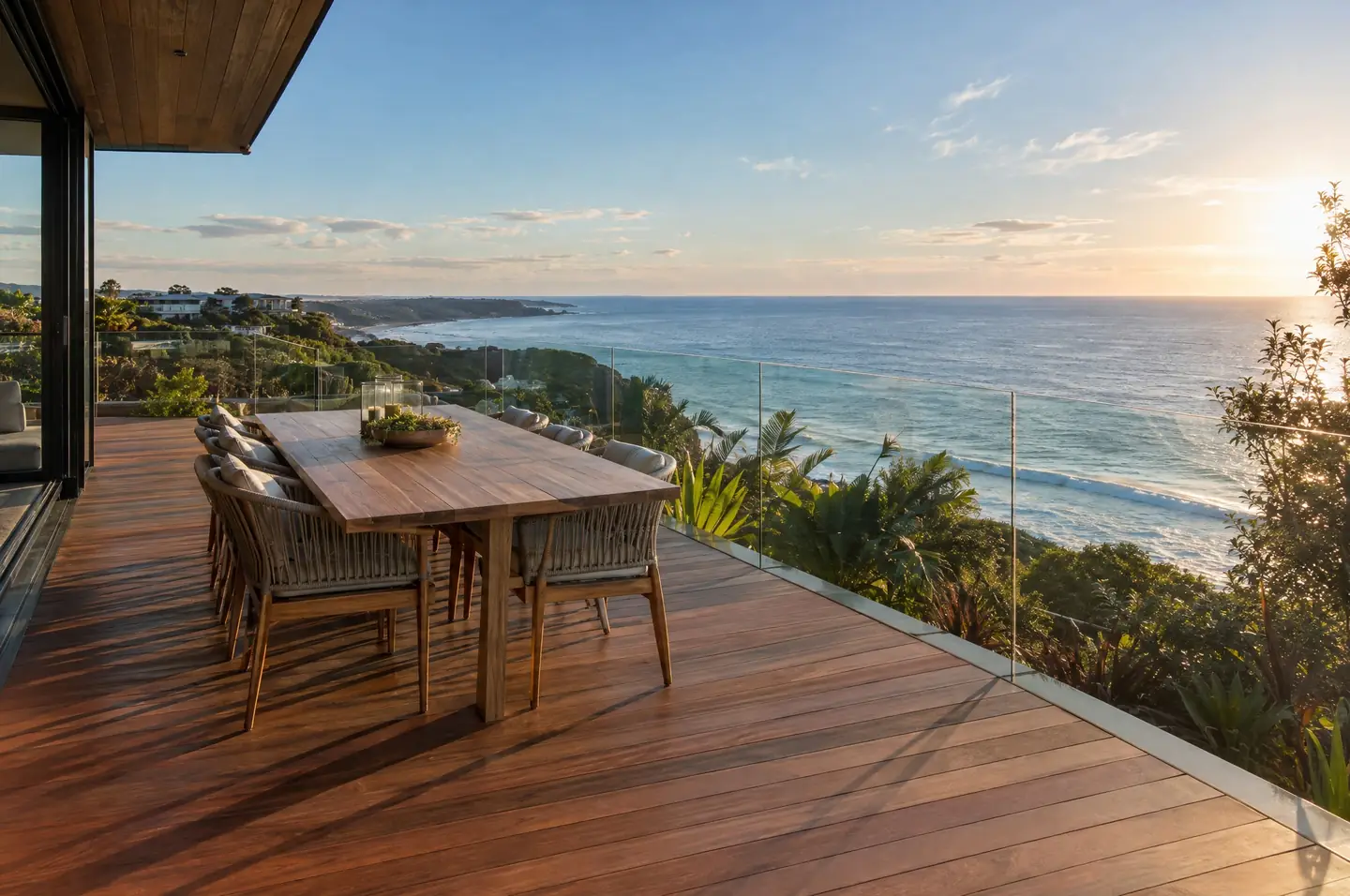
Deck restoration across the Eastern Suburbs
Decks in the Eastern Suburbs face the two things timber likes least: hard sun and salt air. Spotted gum, blackbutt and merbau boards on balconies above the harbour in Darling Point and Point Piper, and on clifftop terraces in Dover Heights and Bronte, silver off within a season if the oil is not kept up. Salt corrodes ordinary screws and leaves black streaks around each head. Shaded decks under figs in Woollahra and Bellevue Hill grow slippery with mould instead. Timber privacy screens, paling fences and teak outdoor furniture suffer the same way. Most of it can be brought back by cleaning, sanding and re-coating rather than replacement, provided the structure beneath is sound.
A careful tradie starts by checking bearers, joists and fixings, then cleans with a timber cleaner at low pressure, sands back grey fibre and raised grain, replaces rusted fasteners with stainless where it matters, and applies a penetrating oil or stain in thin coats with drying time between them. Cleaning run-off and sanding dust stay out of the stormwater drains, as NSW law demands, and pools below are covered. Painted balustrades on houses built before 1970 may carry lead paint, which calls for containment during sanding. Elevated decks need fall controls under the WHS Regulation. Balconies on strata buildings are usually common property, which puts approval with the owners corporation.
When you post the job, photograph the deck surface, the underside if you can reach it, and any screens or furniture to be included, and say whether it has been oiled, stained or painted before. We match it with vetted deck restoration tradies who work in your suburb. They inspect, then quote you directly in writing, describing the preparation, the product and number of coats, how long the deck stays out of use and what happens if the weather turns. Coating needs dry timber and a dry forecast, so expect a window of days. Homeowners pay nothing and take whichever quote suits, or none.
Deck restoration services
Suburbs in the Eastern Suburbs
Frequently asked questions
Exposed decks on the harbour or the clifftops generally want a light clean and re-oil every year, sometimes twice on the sunniest boards, while sheltered or shaded decks can go longer. A penetrating oil can simply be topped up, whereas a film-forming stain has to be stripped once it starts to peel. After seeing the timber, the tradie can suggest an interval.
Oil soaks in, shows the grain and is simple to recoat; stains add colour and a longer interval between coats but need more preparation when they wear. On a coastal deck many tradies favour a penetrating oil with UV blockers because it fails gracefully rather than peeling. Ask for the product name on the quote.
If the deck sits on a balcony slab that is common property, the owners corporation usually needs to approve it through the strata manager, even when the boards belong to you. By-laws also set working hours and may require the tradie's insurance details. Confirm this before accepting a quote.
Yes, as long as the timber is dry and there are a few clear days for coating and curing. Winter sun is gentler, which can help. Shaded south-facing decks dry slowly in the cooler months, so the tradie may allow extra time between cleaning and coating.