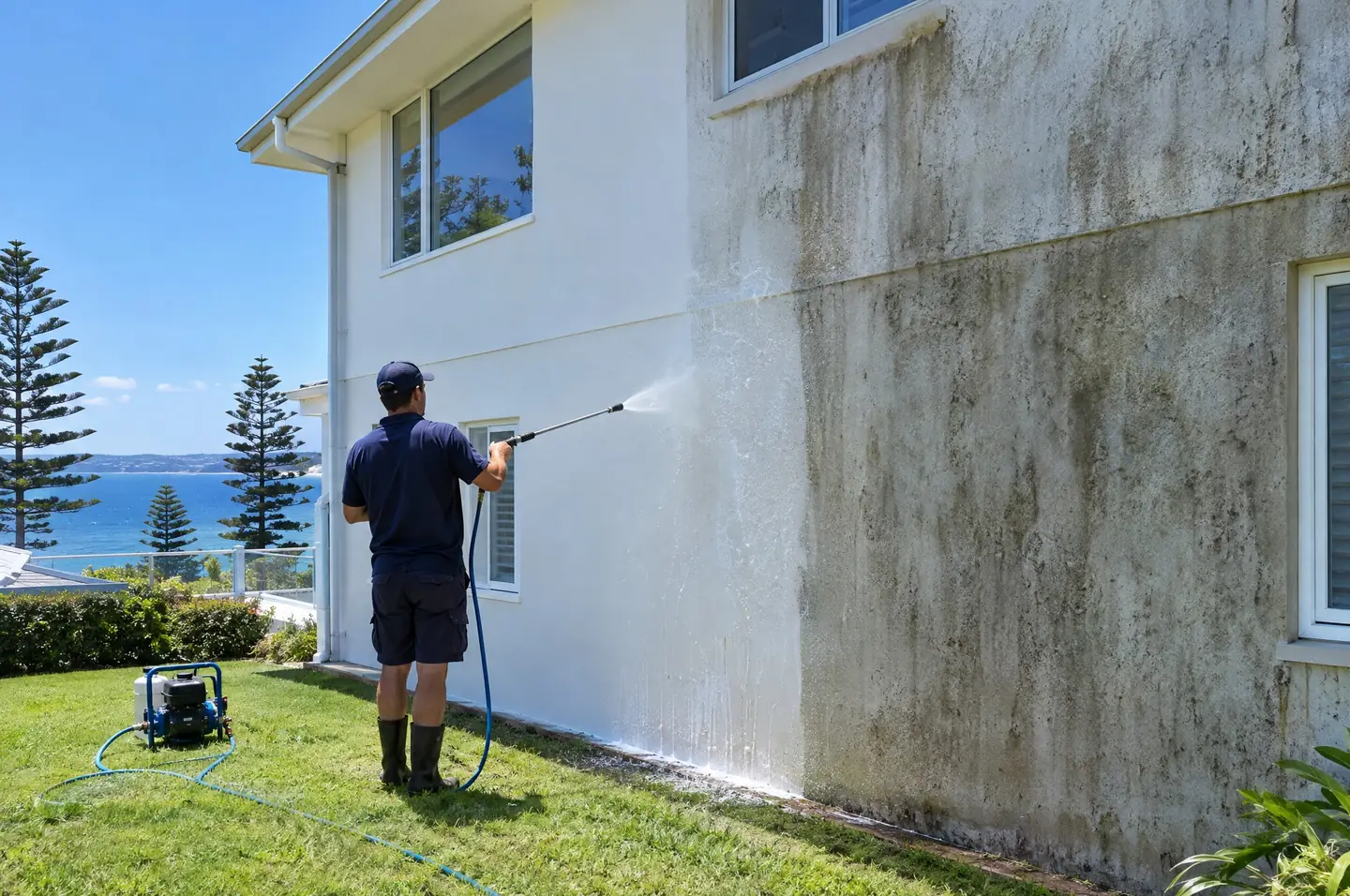
House washing in Dover Heights
Most Dover Heights homes are large, two or three storeys on a slope, finished in render, face brick, off-form concrete and expanses of glass. On the ocean side, salt dries into a grey film that dulls render and leaves white streaks under window sills, while the sheltered western and southern faces grow green algae and black mould. Gutters fill with wind-blown grit as much as leaves, and valley gutters on tiled 1950s roofs trap it. Solar panels lose output under salt haze and gull droppings. Eaves linings, carport ceilings and fences on post-war houses may be asbestos cement and are treated with care from the first look.
A vetted exterior cleaner rinses salt off with fresh water first, then soft washes render and paintwork at low pressure with a detergent chosen for the surface, saving higher pressure for concrete paths and driveways. Suspected asbestos cement is never pressure washed; the tradie stops and advises. Roof, gutter and solar panel cleaning on a tall house uses harness anchors, edge protection or a boom lift under WHS fall rules, and panels get purified water and a soft brush, never detergent. Run-off is directed to lawn and garden or captured, and never allowed to run towards the cliff or the street pit, as NSW stormwater law requires of everyone.
Post the job with the home's storeys, the finishes, and which sides face the ocean, plus a photo from the street. Vetted tradies who already wash houses in Dover Heights and the 2030 postcode take it from there: they inspect, then quote in writing under their own ABN, stating surfaces, methods, fall protection and wash-water handling. The service is free to homeowners and nothing obliges you to accept. Most homes here have a driveway, which keeps access simple, but wind matters: a tradie will usually offer a weekday slot in calm conditions and may split roof and facade work across days if an easterly is forecast.
Exterior cleaning services you can post
Frequently asked questions
Salt. On the ocean side, spray dries on the wall as a pale haze within weeks of a clean. A fresh-water rinse with a hose between visits slows it, and a scheduled wash rather than a one-off keeps it manageable.
Yes, by a tradie working from roof anchors or a platform, which WHS fall rules demand, using purified water and a soft brush. Salt haze and bird droppings cut output noticeably on the clifftop, so a yearly clean is common. Detergent and abrasives are avoided.
Not with pressure, and ideally not at all until the material is confirmed. Asbestos cement is never to be pressure washed or sanded; a vetted tradie will stop and advise if they suspect it. Removing more than 10 square metres is work for a licensed asbestos removalist.
Onto a lawn or bed that can absorb it, or into a capture system for disposal. Letting it run down the driveway to the street pit, or towards the cliff edge, is not acceptable under NSW stormwater rules, so ask the quote to spell out the run-off plan.