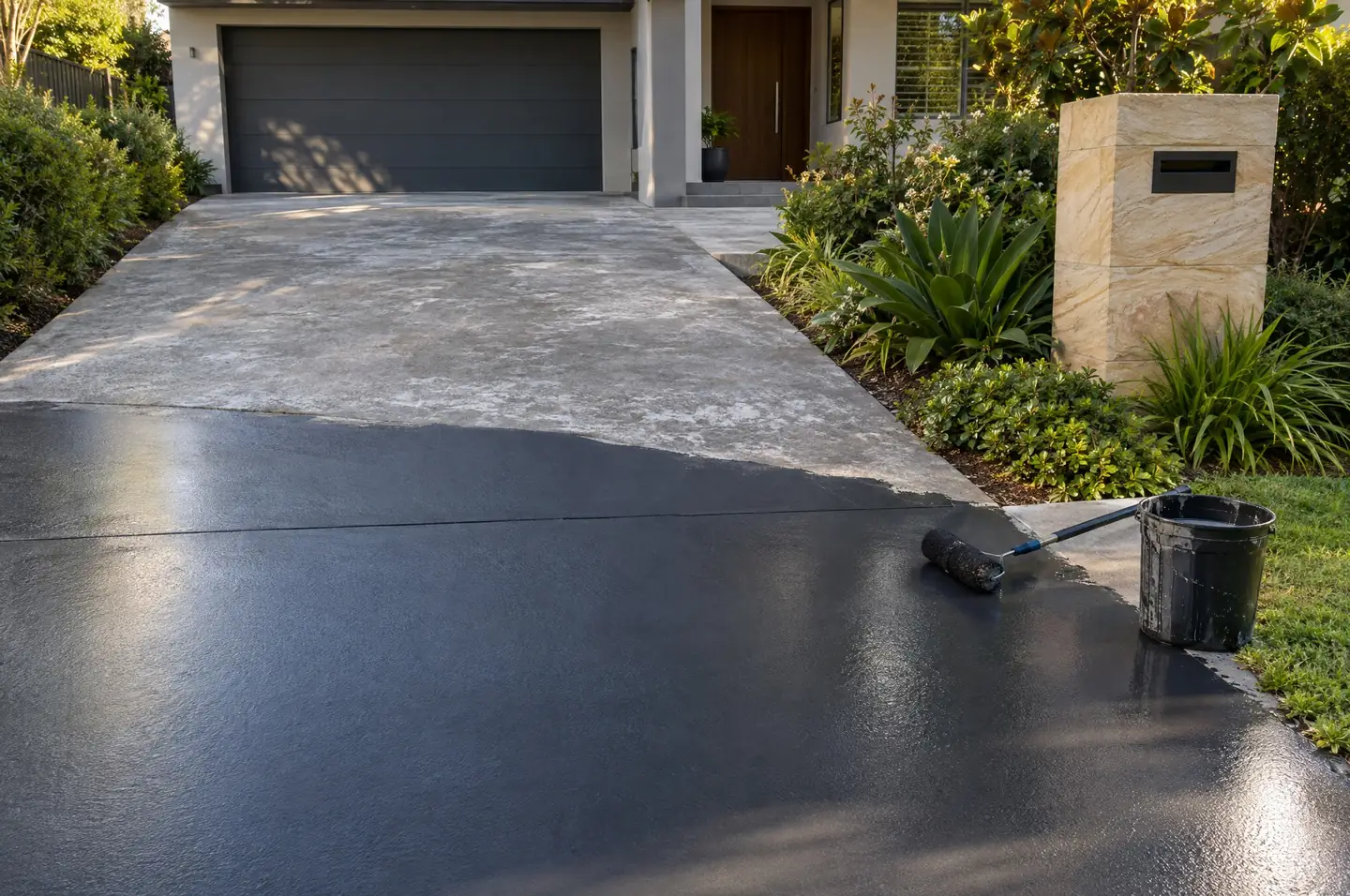
Driveway sealing in Whale Beach
Driveways here are short, steep and often the only flat ground on the block. Most are concrete or exposed aggregate plunging from Whale Beach Road or Surf Road to a garage, with pavers or sandstone continuing down the terraces to the pool. Salt crystallises in sandstone and travertine and lifts the surface, leaves efflorescence on concrete, and pits anything unsealed. Overhanging trees and the shade of the slope keep the lower sections mossy and slippery. Sand tracked up from the beach abrades unsealed surfaces, and the gradient means every spilled drop of oil runs the length of the drive. Coloured concrete fades on the open top section.
A vetted tradie cleans with pressure on concrete and low pressure on sandstone, treats moss, algae and lichen with a biocide, removes salt residue and waits until the surface has dried right through, something that can take days on a shaded slope. Sealer choice is about grip and breathability: a non-slip finish on the gradient, an impregnating sealer on sandstone and travertine that lets the stone dry out, and a colour-enhancing sealer on faded concrete. Wind is the main variable, because an onshore breeze deposits salt and sand on a wet coat, so sealing waits for a calm, dry window. Run-off is bunded at the lowest edge and kept out of the drains that lead to the sand.
Send photos from the road and from the bottom of the drive, note the surfaces involved, the gradient and the stairs, and we match it with vetted sealers who already work on steep blocks between Avalon and Palm Beach. They phone you, look at the drive and quote directly, with nothing charged to you, and you decide whether it goes ahead. Expect the quote to name the cleaner and sealer for each surface, how many coats, when cars can return, how run-off is contained and a weather clause, since a sea breeze can push the sealing day back. Owners who are not in residence can arrange access with the tradie directly.
Driveway & concrete sealing services you can post
Frequently asked questions
Yes. The tradie uses a penetrating sealer or adds non-slip grit to a film sealer, and avoids glossy coatings on the gradient. Ask for a non-slip finish in the quote.
Sealing slows further salt damage but does not restore lost surface. The tradie cleans gently, removes salt, lets the stone dry and applies a breathable impregnator. Badly broken pieces are a job for a stonemason first.
Wind. An onshore breeze carries salt and sand onto wet sealer and dries it unevenly, leaving a gritty, weaker coat. Tradies here wait for a calm window and may clean one day and seal another.
The quote gives a cure time for the product used; expect at least a day, more in cold or humid weather. With little street parking nearby, plan where the cars will go before booking.