Water filtration in Pymble
Pymble's water arrives through Sydney Water's Ryde system, already treated to meet the Australian Drinking Water Guidelines, with the chloramine residual that some people notice in a hot shower. Interwar houses on deep blocks have long service lines, and where galvanised or early copper remains, first-draw water can carry rust or grit. Those two things drive most requests: a sediment-and-carbon unit on the incoming main for a family home with several bathrooms, or a carbon or reverse osmosis unit beneath the kitchen sink, including in apartments near the station. Rebuilt houses with BASIX rainwater tanks need the tank circuit kept separate from filtered mains.
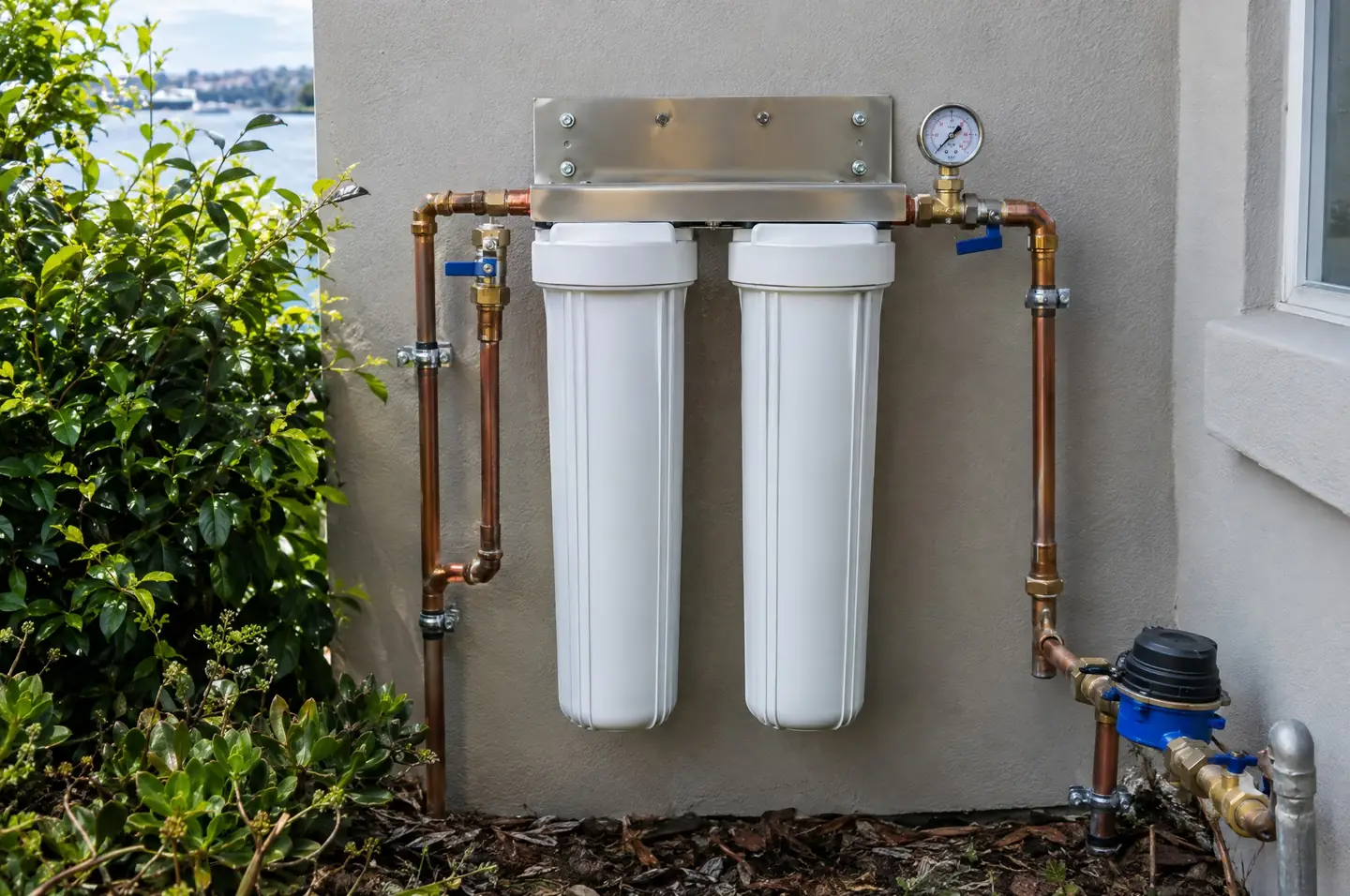
In NSW, tying a filter into the mains is plumbing work, licensed regardless of how small the job is, so a Pymble filter goes to a licensed plumber, and we look the licence up on the public register first. The gear must be WaterMark certified, and the install has to satisfy AS/NZS 3500, the national plumbing standard, and the Plumbing Code of Australia: isolation valves, a bypass so cartridges can be changed, and backflow protection wherever a tank is plumbed indoors. On a deep block the housing sits where the pipe reaches the building rather than out at the street, and in a heritage conservation area it stays out of street view; under-sink units raise no planning question.
Tell us the house type, how many bathrooms, whether the kitchen tap alone or the whole supply should be filtered, and any tank or existing filter. Vetted licensed plumbers who work in Pymble receive the job and quote directly, typically after asking about pipework and the kitchen layout. The quote should list the system and its certifications, cartridge intervals, where it will sit and whether lines to a fridge or boiling tap are part of the price. Nothing is charged to homeowners for posting, and declining all the quotes is fine. Sydney's tap water is safe; filtering is a preference about taste and convenience.
Water filtration services you can post
Frequently asked questions
Yes. Sydney Water's treated supply meets the Australian Drinking Water Guidelines. Households filter for the chloramine taste, for sediment from older pipes on the property, or for convenience such as a filtered fridge line.
Many choose both: filtration on the incoming main for showers and laundry, and a carbon or reverse osmosis tap in the kitchen. Units and smaller households usually only need the kitchen system.
Separately, yes, with its own sediment stage, but the tank and mains must never be joined. NSW Health advises drinking from the mains where it is connected, and the plumber checks backflow protection.
Yes. In NSW even a small tee into the cold line is licensed plumbing, done with WaterMark products, so the tradie matched to you holds a current plumbing licence.